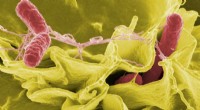
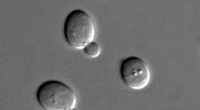
Unicellular organisms are single-celled, meaning they consist of only one cell. These cells are self-sufficient and can perform all life functions on their own, such as:
* Nutrition: Obtaining nutrients from their environment
* Respiration: Converting nutrients into energy
* Excretion: Getting rid of waste products
* Reproduction: Making more of themselves
Examples of unicellular organisms include bacteria, protozoa, and some types of algae.
Multicellular organisms are made up of many cells that work together. They exhibit a higher level of organization and complexity, with specialized cells forming tissues, organs, and organ systems. This allows for greater specialization and efficiency in performing different tasks.
Here's a breakdown of their differences:
| Feature | Unicellular Organisms | Multicellular Organisms |
|---------------|-----------------------|-------------------------|
| Number of cells | One cell | Many cells |
| Cell types | Single type | Multiple specialized types |
| Organization | No tissues or organs | Tissues, organs, organ systems |
| Size | Microscopic | Macroscopic (generally) |
| Life functions | Performed by single cell | Performed by specialized cells working together |
| Complexity | Simple | Complex |
| Examples | Bacteria, protozoa, algae | Plants, animals, fungi |
Here are some key advantages of being multicellular:
* Specialization: Cells can specialize to perform specific tasks, leading to greater efficiency.
* Size: Multicellular organisms can grow larger and more complex.
* Adaptation: Multicellular organisms can adapt to a wider range of environments.
* Reproduction: Multicellular organisms can reproduce sexually, which allows for greater genetic diversity.
But there are also advantages to being unicellular:
* Simplicity: They are simpler to maintain and reproduce.
* Adaptability: They can adapt quickly to changing environments.
* Ubiquity: They can be found in almost every habitat on Earth.
Ultimately, both unicellular and multicellular organisms are successful and have played crucial roles in shaping the diversity of life on Earth. They both occupy unique niches and contribute to the delicate balance of ecosystems.