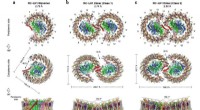
1. Phospholipids: These are the most abundant component of the cell membrane. They are special lipids with a hydrophilic (water-loving) head and a hydrophobic (water-fearing) tail. This unique structure allows them to form a bilayer, with the hydrophilic heads facing outwards towards the watery environments inside and outside the cell, and the hydrophobic tails facing inwards, away from the water. This bilayer forms the structural foundation of the membrane.
2. Proteins: These are embedded within the phospholipid bilayer and play a crucial role in the membrane's functionality. They are categorized into two types:
* Integral proteins: These are permanently embedded within the bilayer and often span the entire membrane. They facilitate various functions like:
* Transport: Moving molecules across the membrane.
* Signaling: Receiving and transmitting signals.
* Enzymatic activity: Catalyzing chemical reactions.
* Peripheral proteins: These are loosely attached to the surface of the membrane, either to the inner or outer layer of the phospholipid bilayer. They typically have a role in:
* Cell shape and support: Providing structural integrity.
* Anchoring: Connecting the membrane to the cytoskeleton or extracellular matrix.
Other important components:
* Cholesterol: This lipid helps to regulate membrane fluidity and stability, preventing it from becoming too rigid or too fluid.
* Glycolipids and glycoproteins: These molecules are attached to the outer surface of the membrane and play roles in cell recognition, signaling, and adhesion.
These components work together in a complex and dynamic manner to form the cell membrane, a vital structure that controls what enters and leaves the cell, maintains the cell's shape, and facilitates communication with its environment.