Here's a breakdown:
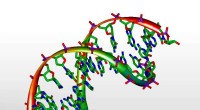
* Nucleic acids are large biomolecules essential for all known forms of life. They carry genetic information and are responsible for protein synthesis.
* Nucleotides are the building blocks of nucleic acids. They consist of three parts:
* A nitrogenous base: These come in five main types: adenine (A), guanine (G), cytosine (C), thymine (T) (found in DNA), and uracil (U) (found in RNA).
* A pentose sugar: This is a five-carbon sugar, either deoxyribose (in DNA) or ribose (in RNA).
* A phosphate group: This is a negatively charged group that plays a crucial role in the structure and function of nucleic acids.
In summary, nucleotides are the monomers that link together to form the long chains of nucleic acids like DNA and RNA.