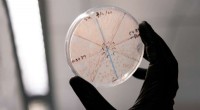
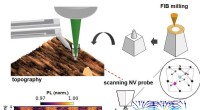
While both biological and physical sciences explore the natural world, they do so through distinct lenses, focusing on different aspects and employing different methodologies.
Here's a breakdown of their key differences:
Biological Science:
* Focus: Living organisms and their processes. This includes the study of cells, tissues, organs, organisms, ecosystems, and interactions within and between these levels.
* Key Disciplines: Biology, zoology, botany, genetics, ecology, microbiology, biotechnology, medicine, agriculture.
* Methodology: Experiments, observations, field studies, genetic analysis, molecular biology techniques.
* Key Concepts: Evolution, heredity, metabolism, homeostasis, biodiversity, ecology, life cycles.
Physical Science:
* Focus: Non-living matter and its properties, as well as the fundamental laws governing the universe. This includes the study of energy, matter, motion, forces, and the interactions between them.
* Key Disciplines: Physics, chemistry, astronomy, geology, meteorology, materials science, environmental science.
* Methodology: Experiments, observations, mathematical modeling, computer simulations, technological applications.
* Key Concepts: Gravity, electromagnetism, thermodynamics, atomic structure, chemical reactions, celestial mechanics, Earth's systems.
Illustrative Examples:
* Biological Science: Studying the migration patterns of birds, the genetic makeup of a plant, or the effects of pollution on a coral reef.
* Physical Science: Investigating the properties of a new material, predicting the trajectory of a rocket, or understanding the formation of a star.
Interconnectedness:
Despite their differences, biological and physical sciences are deeply interconnected. For example:
* Physics governs the processes within living cells, like the flow of energy and the interactions between molecules.
* Chemistry provides the foundation for understanding the chemical reactions that occur within organisms, like photosynthesis and cellular respiration.
* Geology plays a crucial role in understanding the evolution of life and the distribution of species across the planet.
Conclusion:
Biological and physical sciences are complementary fields that provide us with a comprehensive understanding of the world around us. By studying both, we gain a deeper appreciation for the intricate interplay between living organisms and their non-living environment.