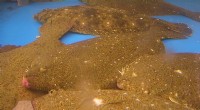
Here's a breakdown of how this works:
1. Variation:
* Within any population, there's natural variation in genes. This means individuals have different combinations of traits.
* Some of these variations are inherited from their parents.
2. Selective Pressure:
* The environment presents challenges and opportunities. These are called selective pressures.
* Examples include:
* Climate: Temperature, rainfall, sunlight
* Food availability: Type and amount of food sources
* Predators: Animals that hunt other animals
* Competitors: Organisms that vie for the same resources
* Diseases: Pathogens that can cause illness
3. Advantageous Traits:
* Some genetic variations provide a survival or reproductive advantage in the face of these selective pressures.
* Example: A mutation in a moth that causes it to have darker wings might make it better camouflaged against a dark forest, increasing its chances of surviving to reproduce.
4. Survival and Reproduction:
* Individuals with advantageous traits are more likely to:
* Survive longer: They might be better able to find food, escape predators, or withstand harsh conditions.
* Reproduce more: They might attract mates or be better at raising offspring.
5. Inheritance:
* The advantageous traits are passed down to their offspring.
* Over time, the frequency of these advantageous traits increases in the population.
Examples of Adaptive Traits:
* Camouflage: Blending into the environment to avoid predators.
* Speed: Being able to quickly escape predators or chase prey.
* Disease resistance: Having a strong immune system to fight off infections.
* Tolerance to harsh environments: Withstanding extreme temperatures, salinity, or other challenging conditions.
* Efficient resource utilization: Being able to extract nutrients from scarce resources.
Important Note:
* Adaptation is a gradual process. It takes many generations for significant changes to occur in a population.
* There is no "perfect" adaptation. The environment is constantly changing, so what's advantageous today might not be tomorrow.
* Adaptations are specific to a particular environment. A trait that helps an organism survive in one environment might be harmful in another.
Let me know if you'd like me to elaborate on any of these concepts or give more specific examples!