Here's why:
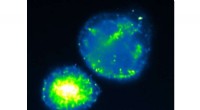
* Protists are a diverse group: They include single-celled organisms (like amoebas and algae) as well as some multicellular forms (like seaweed). While some protists lack the specialized structures we call organs, others have more complex internal organization.
* Organ formation is not the only defining characteristic: Kingdoms are classified based on a variety of features, including cell structure, nutrition, and reproduction. Protists are united by their mostly single-celled nature and lack of a complex, multicellular body plan.
It's important to remember that:
* Organisms are not grouped solely based on the absence of something. Instead, they are classified based on shared characteristics.
* Even within a kingdom, there's a wide range of diversity.
So, while the lack of organ formation may be a common feature of many protists, it's not the defining factor that unites them into a single kingdom.