1. Cellular Structure:
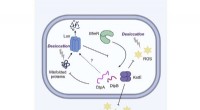
* Bacteria: Typically have a simple cell structure with a single circular chromosome, no membrane-bound nucleus, and lack complex internal organelles. They have peptidoglycan in their cell wall.
* Archaea: Share some similarities with bacteria, such as lack of a nucleus and having a single circular chromosome. However, they have unique membrane lipids, cell wall structures (lacking peptidoglycan), and distinct gene expression mechanisms.
* Eukarya: Have a complex cell structure with a membrane-bound nucleus, multiple chromosomes, and various organelles like mitochondria and chloroplasts. They have linear chromosomes enclosed within a nucleus.
2. Biochemistry:
* Bacteria: Exhibit a wide range of metabolic pathways, including photosynthesis, respiration, and fermentation. They can be both aerobic and anaerobic.
* Archaea: Often possess unique metabolic pathways, including the ability to survive in extreme environments (extremophiles) like hot springs, salt lakes, and deep-sea vents. They also have distinct lipid compositions in their cell membranes.
* Eukarya: Feature a complex biochemical machinery, including advanced forms of photosynthesis and respiration. They typically use oxygen for respiration, although some exceptions exist.
3. Evolutionary History:
* Bacteria: Represent the earliest life forms on Earth and are considered to be the ancestors of all other life.
* Archaea: Thought to have diverged from the bacterial lineage early in Earth's history. They are closer to eukaryotes than bacteria in terms of evolution.
* Eukarya: Evolved later than bacteria and archaea, possibly through a symbiotic relationship between an archaeal ancestor and a bacterium that gave rise to mitochondria.
Here's a summary table:
| Feature | Bacteria | Archaea | Eukarya |
|---|---|---|---|
| Cell Structure | Simple, single circular chromosome, no nucleus | Simple, single circular chromosome, no nucleus (but distinct from Bacteria) | Complex, membrane-bound nucleus, multiple linear chromosomes |
| Cell Wall | Peptidoglycan | No peptidoglycan | No peptidoglycan (in most cases) |
| Membrane Lipids | Straight-chain fatty acids | Branched-chain fatty acids | Straight-chain fatty acids |
| Metabolic Pathways | Diverse, including photosynthesis, respiration, fermentation | Unique and adapted to extreme environments | Advanced forms of photosynthesis and respiration |
| Evolutionary History | Oldest lineage, ancestors of all life | Diverged early from Bacteria, closer to Eukarya | Evolved from an archaeal ancestor, possibly through symbiosis |
Understanding the distinctions between these domains helps us grasp the incredible diversity of life on Earth and the remarkable evolutionary journey that led to its development.