* Individual cells: Even when connected, each yeast cell remains a self-sufficient entity. It has its own nucleus, cytoplasm, organelles, and cell membrane. It can function independently and reproduce on its own.
* Connections for communication and reproduction: The connections between yeast cells are called budding scars or pseudohyphae. These structures aren't true multicellular tissues like those found in animals or plants. They serve specific purposes:
* Budding scars: These are marks left behind after a yeast cell has budded (reproduced asexually). They help researchers estimate a cell's age.
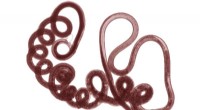
* Pseudohyphae: These elongated chains of cells can help yeast to colonize new environments and access nutrients.
* No specialized cells: Unlike multicellular organisms, yeast cells don't differentiate into specialized cells with specific functions (like nerve cells or muscle cells). All yeast cells are essentially the same, capable of carrying out all necessary functions for survival.
In summary: Even though they can form chains or clusters, yeast cells remain individual units, each functioning independently. The connections are for communication and reproduction, not for forming true multicellular tissues.