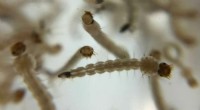
1. Variation: Individuals within a species exhibit natural variations in their traits. These variations arise from random mutations in their DNA.
2. Inheritance: These variations are heritable, meaning they can be passed down to offspring.
3. Differential Survival and Reproduction: Individuals with traits that better suit them to their environment are more likely to survive, reproduce, and pass on their genes. This is the core principle of natural selection.
4. Accumulation of Beneficial Traits: Over generations, the frequency of beneficial traits increases in a population because individuals possessing those traits leave more offspring. Conversely, individuals with less advantageous traits are less likely to reproduce and pass them on, leading to their gradual decline in the population.
Examples:
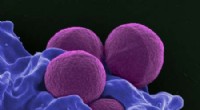
* Antibiotic Resistance in Bacteria: A random mutation might give a bacterium resistance to a specific antibiotic. In the presence of that antibiotic, this resistant bacterium survives and reproduces, passing on its resistant gene. Over time, the resistant strain becomes the dominant form in the population.
* Camouflage in Animals: Animals with better camouflage are less likely to be preyed upon. They survive longer, reproduce more, and pass on their camouflage genes. This leads to the evolution of more effective camouflage in the species.
Key Points:
* Natural selection is not goal-oriented: It doesn't strive for "perfection." It simply favors traits that increase an organism's fitness in its current environment.
* The environment plays a crucial role: Changes in the environment can lead to different traits being advantageous, influencing the direction of evolution.
* Evolution is a gradual process: It occurs over many generations, and the changes may be subtle.
In essence, the combination of variation, inheritance, and differential survival and reproduction leads to the gradual increase in the frequency of beneficial traits within a population, shaping the evolution of species over time.