Core Concepts and Principles:
* Variation: Differences within a population, driven by genetic mutations and recombination.
* Heritability: The passing of traits from parents to offspring.
* Selection: The process where individuals with advantageous traits are more likely to survive and reproduce.
* Adaptation: The accumulation of advantageous traits within a population over generations.
* Fitness: An organism's ability to survive and reproduce in its environment.
* Natural Selection: The mechanism by which organisms better adapted to their environment tend to survive and reproduce more successfully.
* Artificial Selection: Selective breeding by humans to enhance desired traits in domesticated plants and animals.
* Speciation: The process by which new species arise from existing ones through isolation and genetic divergence.
* Common Descent: The idea that all living organisms share a common ancestor.
Supporting Evidence:
* Fossil Record: Provides evidence of extinct species and transitional forms, demonstrating evolutionary changes over time.
* Comparative Anatomy: Similarities in skeletal structures, organs, and developmental patterns point to shared ancestry.
* Molecular Biology: Comparisons of DNA and protein sequences reveal evolutionary relationships and common ancestry.
* Biogeography: The distribution of species across the globe provides insights into the influence of geographic factors on evolution.
Influential Figures:
* Charles Darwin: His observations and writings on natural selection laid the foundation for modern evolutionary theory.
* Alfred Russel Wallace: Independently developed similar ideas to Darwin, co-publishing their findings.
* Gregor Mendel: His work on inheritance provided the genetic basis for understanding how traits are passed down.
* Richard Dawkins: Prominent contemporary evolutionary biologist and advocate for evolutionary theory.
Related Terms:
* Phylogeny: The evolutionary history and relationships between species.
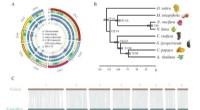
* Evolutionary Tree: A branching diagram that represents the evolutionary relationships between organisms.
* Convergent Evolution: The independent evolution of similar traits in different lineages due to similar environmental pressures.
* Divergent Evolution: The evolution of different traits in related lineages due to different selective pressures.
* Evolutionary Arms Race: An ongoing cycle of co-evolution between predator and prey, parasite and host, etc.
Philosophical Implications:
* Materialism: The view that all phenomena can be explained by physical processes.
* Reductionism: The approach of understanding complex phenomena by breaking them down into their simpler components.
* Teleology: The belief that natural processes have a purpose or goal.
Beyond the Basics:
* Evo-Devo: The study of how evolutionary changes in development contribute to the diversity of life.
* Evolutionary Psychology: The application of evolutionary theory to understand human behavior and cognition.
* Extinction: The disappearance of a species from Earth.
This is not an exhaustive list, but it provides a broad overview of the words that describe and influence the theory of evolution. Understanding these words and their interconnectedness is crucial for comprehending the complex process of evolution.