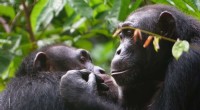
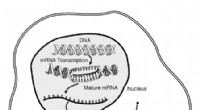
* Animals: Animals are eukaryotes, meaning they have a nucleus and other membrane-bound organelles.
* Plants: Plants are also eukaryotes with complex cellular structures.
* Fungi: Fungi are eukaryotes with cell walls made of chitin, unlike the peptidoglycan walls of bacteria.
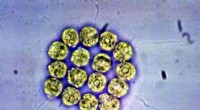
* Protists: Protists are a diverse group of eukaryotes, including algae, amoebas, and slime molds.
* Viruses: Viruses are not considered living organisms because they lack the machinery to reproduce on their own. They require a host cell to replicate.
Key characteristics of prokaryotes that distinguish them from these non-examples:
* Lack a nucleus: Their genetic material (DNA) is not enclosed within a membrane-bound nucleus.
* Lack membrane-bound organelles: They lack complex internal structures like mitochondria, chloroplasts, etc.
* Small size: Prokaryotes are generally much smaller than eukaryotic cells.
* Simple structure: Their structure is relatively simple compared to eukaryotic cells.
Let me know if you have any more questions!