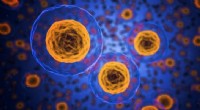
1. Cell Membrane: This is the outer boundary of the cell, acting like a gatekeeper. It controls what goes in and out of the cell.
2. Cytoplasm: The jelly-like substance that fills the cell. It contains many important structures, including:
* Organelles: These are like tiny organs within the cell, each with a specific function. Some examples are:
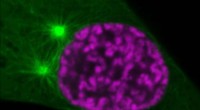
* Nucleus: Contains the cell's genetic material (DNA).
* Mitochondria: The powerhouse of the cell, responsible for energy production.
* Endoplasmic reticulum: A network of membranes involved in protein synthesis and lipid production.
* Golgi apparatus: Processes and packages proteins and other molecules for transport.
* Lysosomes: Break down waste materials and cellular debris.
* Ribosomes: Sites of protein synthesis.
3. Nucleus: The control center of the cell, containing DNA. The nucleus is enclosed within a membrane called the nuclear envelope.
So, while you could say the three main parts are the cell membrane, cytoplasm, and nucleus, remember that the cytoplasm contains many more essential structures.