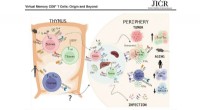
* DNA (deoxyribonucleic acid): This is the genetic material of the cell, containing the instructions for building and maintaining the organism. DNA is organized into chromosomes.
* Nucleolus: This is a dense region within the nucleus where ribosomes are assembled. Ribosomes are essential for protein synthesis.
* Chromatin: This is the complex of DNA and proteins that makes up chromosomes. It is responsible for packaging and organizing DNA within the nucleus.
* Nuclear envelope: This is a double membrane that surrounds the nucleus, separating it from the cytoplasm. It has pores that allow for the passage of molecules between the nucleus and the cytoplasm.
* Nuclear lamina: This is a network of protein filaments that lines the inner surface of the nuclear envelope. It helps to maintain the shape of the nucleus and to regulate nuclear functions.
Key point: While some proteins involved in gene expression and DNA replication are found in the nucleus, the majority of proteins are synthesized in the cytoplasm and transported to the nucleus as needed.