Key Concepts:
* Change over time: Evolution is about populations of organisms changing over generations.
* Natural Selection: This is the driving force of evolution. It's the idea that individuals with traits that make them better suited to their environment are more likely to survive and reproduce, passing on those advantageous traits to their offspring.
* Genetic Variation: Differences in the genes within a population provide the raw material for evolution. These variations arise from mutations, random changes in DNA.
* Adaptation: Over time, natural selection leads to the accumulation of traits that help organisms survive and reproduce in their specific environment. These traits are called adaptations.
How it works:
1. Variation: Individuals within a population have different traits due to genetic variation.
2. Selection: Some of these traits are more advantageous for survival and reproduction in the environment.
3. Inheritance: Individuals with advantageous traits are more likely to survive and reproduce, passing those traits on to their offspring.
4. Change over generations: Over many generations, the frequency of advantageous traits increases in the population, while less advantageous traits become less common. This gradual change in the genetic makeup of a population is evolution.
Examples:
* The evolution of antibiotic resistance in bacteria: Bacteria with mutations that allow them to resist antibiotics survive and reproduce more successfully, leading to populations of antibiotic-resistant bacteria.
* The evolution of long necks in giraffes: Giraffes with longer necks could reach higher leaves, giving them an advantage in accessing food. This trait was passed on, leading to the evolution of giraffes with increasingly long necks.
Important to note:
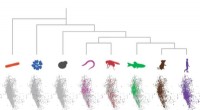
* Evolution is not a linear progression: It's a branching process, with different species evolving along different paths.
* Evolution is not about progress: It's about adaptation to specific environments. Some traits might be advantageous in one environment but disadvantageous in another.
* Evolution is a scientific theory: This means it's a well-supported explanation for a phenomenon based on evidence and rigorous testing.
In conclusion, evolution is a fundamental process that explains the diversity and complexity of life on Earth. Understanding evolution is crucial for understanding everything from human health to the conservation of endangered species.