Here's why:
* Cellular respiration is the process where cells break down glucose (a sugar) to release energy in the form of ATP. This energy is used to power all the functions of a living cell.
* Oxygen is the final electron acceptor in this process. It combines with hydrogen ions and electrons to form water, which is a waste product of cellular respiration.
Without oxygen, most organisms cannot efficiently extract energy from glucose and would die.
There are some exceptions, though:
* Anaerobic organisms can survive and thrive in environments without oxygen. They use alternative electron acceptors instead of oxygen.
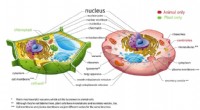
* Certain cells in our bodies, like red blood cells, lack mitochondria, the organelles where most cellular respiration occurs, and thus do not require oxygen.