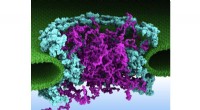
* Structure: The cell membrane is composed of a phospholipid bilayer with embedded proteins. The phospholipid molecules have hydrophilic heads (attracted to water) and hydrophobic tails (repelled by water). This structure creates a barrier that is permeable to small, non-polar molecules (like oxygen, carbon dioxide, and lipids) but generally impermeable to large, polar molecules (like sugars and ions).
* Selective transport: Proteins embedded in the membrane play a key role in regulating the passage of specific molecules. Some act as channels or pores, allowing specific ions to pass through. Others act as carriers, binding to specific molecules and transporting them across the membrane.
* Maintaining homeostasis: The semi-permeability of the cell membrane is essential for maintaining the cell's internal environment, or homeostasis. It allows the cell to take in nutrients, eliminate waste products, and regulate the concentration of ions and other molecules inside the cell.
In summary, the cell membrane is semi-permeable because it allows some molecules to pass through while blocking others. This selective permeability is crucial for the cell to function and maintain its internal environment.