Here's a breakdown:
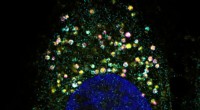
* Cytoplasm is a thick, gel-like fluid that fills the space between the cell membrane and the nucleus.
* It's primarily composed of water but also contains various dissolved substances like salts, sugars, proteins, and lipids.
* Cytoplasm serves as the medium for many important cellular processes, including:
* Chemical reactions: It provides the environment for metabolic processes.
* Transport: It allows for the movement of molecules and organelles within the cell.
* Structure: It helps maintain the shape of the cell.
* Organelle suspension: It holds the cell's internal structures, called organelles, in place.
While the cytoplasm of plant and animal cells shares many similarities, there are some key differences:
* Plant cells have a large central vacuole filled with water that pushes the cytoplasm towards the edges of the cell.
* Animal cells typically have smaller vacuoles distributed throughout the cytoplasm.
Let me know if you have any other questions about cells!