Scientists utilize a variety of evidence to construct phylogenetic trees, which depict the evolutionary relationships between organisms. Here are some of the most common types:
1. Morphological Data:
* Anatomical Features: Comparing the physical structures of organisms, such as bone arrangements, muscle structures, or organ systems. This includes both homologous structures (structures with similar origin but different function, indicating common ancestry) and analogous structures (structures with similar function but different origin, indicating convergent evolution).
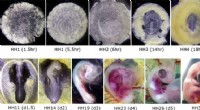
* Developmental Features: Observing the development of embryos and comparing developmental stages to identify similarities and differences.
2. Molecular Data:
* DNA Sequence Comparisons: Analyzing the nucleotide sequences of genes and comparing them across different species. This is a powerful tool for determining evolutionary relationships, especially for organisms that share similar morphology but have diverged genetically.
* Protein Sequence Comparisons: Comparing the amino acid sequences of proteins. This provides insights into the evolutionary history of genes and the functional relationships between proteins.
* Genome-wide Analysis: Studying the entire genome of an organism, including gene order and the presence or absence of specific genes. This can provide a more comprehensive picture of evolutionary relationships.
3. Fossil Data:
* Fossil Record: Analyzing fossils to understand the morphology and distribution of extinct organisms, which helps to reconstruct evolutionary lineages and estimate divergence times.
* Fossil Age: Using radiometric dating techniques to determine the age of fossils and establish a timeline for evolutionary events.
4. Behavioral Data:
* Shared Behaviors: Comparing complex behaviors, such as mating rituals, communication patterns, or social structures, to infer evolutionary relationships.
5. Biogeographical Data:
* Geographic Distribution: Examining the current and historical distribution of organisms to understand how species have migrated and diverged.
The placement of an organism on a phylogenetic tree provides several crucial insights:
* Evolutionary Relationships: It shows how closely related an organism is to other organisms and how they have diverged from a common ancestor.
* Ancestor-Descendant Relationships: It indicates which organisms are more closely related to the ancestor of a group.
* Divergence Times: By analyzing the rate of molecular change, scientists can estimate when different lineages diverged from each other.
* Adaptive Evolution: Comparing the traits of closely related species can reveal insights into how adaptation and natural selection have shaped their evolution.
* Classification: Phylogenetic trees are used to classify organisms into taxonomic groups based on their evolutionary relationships.
In conclusion, the use of multiple types of evidence is crucial for constructing accurate and robust phylogenetic trees, providing a comprehensive understanding of the evolutionary history of life on Earth.