Natural Selection:
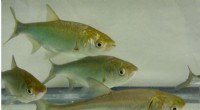
* Variation: Individuals within a population exhibit variations in their traits (e.g., size, color, behavior).
* Heritability: These variations are often inherited from parents to offspring.
* Differential Survival & Reproduction: Individuals with traits that make them better suited to their environment are more likely to survive and reproduce, passing on those advantageous traits.
* Adaptation: Over generations, the accumulation of these advantageous traits leads to the adaptation of a species to its environment.
Key Points:
* It's not about "survival of the fittest" in the sense of being the strongest: It's about those best suited to survive and reproduce in their specific environment.
* Evolution is a gradual process: Changes occur slowly over many generations.
* It's not about a predetermined goal: Evolution doesn't have a "plan" or an endpoint; it responds to changing environmental pressures.
In essence, the theory of evolution by natural selection explains how life on Earth has diversified and adapted over millions of years. It's supported by a vast amount of scientific evidence from fields such as paleontology, genetics, and comparative anatomy.