Here's how it works:
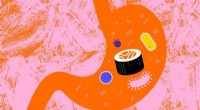
* Food is broken down: Through a process called cellular respiration, the food we eat (mainly carbohydrates) is broken down into smaller molecules, like glucose.
* Glucose enters the mitochondria: Glucose enters the mitochondria, which is often referred to as the "powerhouse of the cell."
* Energy is released: Inside the mitochondria, a series of chemical reactions occur in a process called the Krebs cycle and the electron transport chain. These reactions break down the glucose further, releasing energy in the form of ATP (adenosine triphosphate).
* ATP powers cellular functions: The released ATP is then used by the cell to carry out various functions, such as muscle contraction, protein synthesis, and active transport of molecules across cell membranes.
So, in short, the mitochondria is where the chemical energy stored in food is converted into a usable form of energy (ATP) that powers all the essential activities of the cell.