However, there are a few strong contenders:
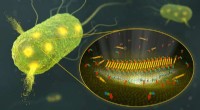
* Prokaryotes: These single-celled organisms lack a nucleus and other membrane-bound organelles. They are considered the oldest forms of life on Earth, appearing about 3.5 billion years ago. Examples include bacteria and archaea.
* LUCA (Last Universal Common Ancestor): This hypothetical organism is considered the ancestor of all living things on Earth. Its existence is inferred from the similarities found in the genetic code of all known life forms. While we don't have any direct fossil evidence of LUCA, it is estimated to have existed around 3.5 to 4.5 billion years ago.
It's important to note that:
* Simplicity is relative: Even the simplest organisms are incredibly complex on a molecular level.
* Evolutionary history is complex: The lineages of life have diverged and evolved for billions of years, making it difficult to pinpoint a single "simplest" organism.
So, while we can't definitively say which is the oldest and simplest organism, it's likely that some form of prokaryote or LUCA holds that title.