Here's a breakdown:
* Taxonomy: The science of classification.
* Taxonomic Hierarchy: A hierarchical system of grouping organisms into increasingly inclusive categories, starting with the most specific and ending with the broadest.
* Taxonomic Ranks: The levels within the hierarchy, from most specific to least specific:
* Species: The most basic unit of classification, a group of organisms that can interbreed and produce fertile offspring.
* Genus: A group of closely related species.
* Family: A group of closely related genera.
* Order: A group of closely related families.
* Class: A group of closely related orders.
* Phylum: A group of closely related classes.
* Kingdom: A group of closely related phyla.
* Domain: The broadest category, grouping organisms based on fundamental cellular characteristics.
While "taxonomy" refers to the classification system itself, tools used by scientists to develop and visualize this system include:
* Phylogenetic Trees: Diagrams that show the evolutionary relationships between organisms.
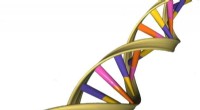
* DNA Sequencing: Analyzing the genetic code of organisms to determine their evolutionary relationships.
* Morphological Comparisons: Examining the physical characteristics of organisms to identify similarities and differences.
By using these tools, scientists can create a comprehensive and organized understanding of the diversity of life on Earth.