1. Observation and Questioning:
- Scientists observe the natural world, identifying patterns, anomalies, and unanswered questions.
- This observation sparks curiosity and leads to the formulation of questions that need to be addressed.
2. Hypothesis Formation:
- A hypothesis is a testable explanation or prediction for the observed phenomena.
- It should be specific, falsifiable (meaning it can be proven wrong), and based on existing knowledge.
3. Experimentation and Data Collection:
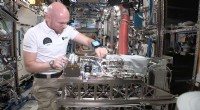
- Scientists design and conduct experiments to test their hypotheses.
- They carefully control variables, collect data systematically, and analyze the results.
4. Data Analysis and Interpretation:
- Data is analyzed statistically and objectively to draw conclusions about the validity of the hypothesis.
- Scientists look for patterns, trends, and relationships within the data.
5. Conclusion and Communication:
- Based on the analysis, scientists draw conclusions about their hypotheses.
- They communicate their findings through publications, conferences, and other means.
6. Peer Review and Replication:
- Scientific findings are subjected to peer review by other scientists in the field.
- This ensures quality, accuracy, and rigor in the research process.
- Results should be replicable by other researchers to confirm the findings.
7. Revision and Refinement:
- Scientific knowledge is constantly evolving.
- New evidence may lead to revisions or refinements of existing theories.
- This iterative process ensures that science is self-correcting.
Key Principles of Scientific Inquiry:
* Empiricism: Reliance on evidence gathered through observation and experimentation.
* Objectivity: Striving to minimize bias in data collection and analysis.
* Parsimony: Seeking the simplest explanation that accounts for the observations.
* Falsifiability: The ability for a hypothesis to be proven wrong.
* Reproducibility: The ability for other scientists to replicate experiments and confirm results.
In summary, science operates through a cycle of observation, hypothesis, experimentation, analysis, conclusion, communication, and peer review. This iterative process ensures that scientific knowledge is constantly being refined and improved.