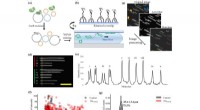
Research aligns with the scientific method:
* Observation: Research starts with identifying a problem or question.
* Hypothesis: Researchers formulate testable predictions to answer those questions.
* Experimentation: Researchers conduct experiments or gather data to test their hypotheses.
* Analysis: Data is analyzed to determine if it supports or refutes the hypotheses.
* Conclusion: Researchers draw conclusions based on the analysis and communicate their findings.
Key characteristics of research that resemble science:
* Systematic and rigorous: Research follows established methods and procedures to ensure objectivity and reliability.
* Empirical: Research relies on observation and data collection rather than subjective opinions.
* Objective: Researchers strive to minimize bias in their design and interpretation of findings.
* Replicable: Research findings should be able to be replicated by other researchers.
Why research isn't a science itself:
* Scope: Research is a tool used in various fields, not a single discipline. It's employed in the natural sciences (biology, chemistry), social sciences (psychology, sociology), humanities (history, literature), and even in fields like business and marketing.
* Focus: Each scientific discipline has its own unique subject matter, theories, and methodologies. Research adapts to these specific areas.
* No single theory or body of knowledge: Research itself doesn't have a singular overarching theory or body of knowledge like physics or chemistry.
In conclusion: Research is a scientific *process* that is used within different scientific *disciplines*. It shares key characteristics with science, like systematic methodology, empirical data, and objectivity, but it is not a science itself.