Natural Sciences:
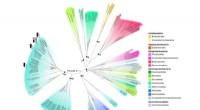
* Biology: Study of life and living organisms.
* Zoology: Animals
* Botany: Plants
* Microbiology: Microorganisms
* Ecology: Interactions between organisms and their environment
* Genetics: Heredity and variation
* Physiology: Functions of living organisms
* Chemistry: Study of matter and its properties.
* Organic Chemistry: Carbon-containing compounds
* Inorganic Chemistry: Non-carbon containing compounds
* Analytical Chemistry: Identification and quantification of substances
* Physical Chemistry: Physical principles governing chemical phenomena
* Biochemistry: Chemistry of living organisms
* Physics: Study of the fundamental constituents of the universe and their interactions.
* Classical Mechanics: Motion and forces
* Electromagnetism: Electricity and magnetism
* Thermodynamics: Heat and energy
* Quantum Mechanics: Behavior of matter at atomic and subatomic levels
* Astrophysics: Physics of celestial objects
* Earth Science: Study of the Earth's physical systems and history.
* Geology: Earth's structure and composition
* Meteorology: Atmosphere and weather
* Oceanography: Oceans and marine life
* Climatology: Earth's climate
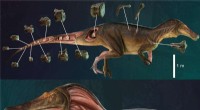
* Paleontology: Fossils and ancient life
* Astronomy: Study of celestial objects and the universe.
* Astrophysics: Physics of celestial objects
* Cosmology: Origin and evolution of the universe
Formal Sciences:
* Mathematics: Study of abstract structures, patterns, and relationships.
* Algebra: Manipulation of symbols
* Calculus: Rates of change and limits
* Geometry: Shapes and spaces
* Statistics: Data analysis and interpretation
* Computer Science: Study of computation, algorithms, and information processing.
* Software Engineering: Design and development of software
* Artificial Intelligence: Intelligent systems
* Data Science: Analysis and interpretation of data
* Cybersecurity: Protection of computer systems
Social Sciences:
* Psychology: Study of the human mind and behavior.
* Sociology: Study of human societies and their interactions.
* Anthropology: Study of human cultures and their origins.
* Economics: Study of production, distribution, and consumption of goods and services.
* Political Science: Study of political systems and government.
* History: Study of past events and their causes and consequences.
* Geography: Study of the Earth's surface, its features, and human activities.
Applied Sciences:
* Engineering: Application of scientific principles to solve practical problems.
* Mechanical Engineering: Design and construction of machines
* Civil Engineering: Infrastructure and buildings
* Electrical Engineering: Electricity and electronics
* Chemical Engineering: Design and operation of chemical processes
* Medicine: Diagnosis, treatment, and prevention of diseases.
* Surgery: Surgical procedures
* Pharmacology: Drugs and their effects
* Public Health: Health of populations
* Agriculture: Production of crops and livestock.
* Environmental Science: Study of the environment and its interactions with human activities.
This is not an exhaustive list, and there are many other branches and sub-branches of science. However, it gives a general overview of the major areas of scientific study.