* Natural Sciences: These focus on the study of the physical world, including the laws that govern it.
* Physics: The study of matter and energy, and their fundamental interactions.
* Chemistry: The study of the composition, structure, properties, and reactions of matter.
* Biology: The study of living organisms, their structure, function, growth, origin, evolution, and distribution.
* Astronomy: The study of celestial objects and phenomena, including planets, stars, galaxies, and the universe as a whole.
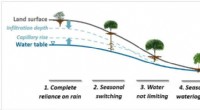
* Geology: The study of the Earth's physical structure, composition, history, and processes.
* Ecology: The study of the interactions between organisms and their environment.
* Social Sciences: These focus on the study of human society and its structures, including the behavior of individuals and groups within society.
* Psychology: The study of the mind and behavior.
* Sociology: The study of human social behavior, interactions, and organizations.
* Anthropology: The study of human societies, cultures, and their development.
* Economics: The study of how people make choices under conditions of scarcity.
* Political Science: The study of government, political systems, and political behavior.
* History: The study of past events, people, and societies.
It's important to note: This division is a simplification and there is some overlap between the two. For example, some areas of study, like environmental science, draw heavily from both natural and social sciences. Also, there are many other branches of science, such as computer science, that don't neatly fit into this categorization.