1. Hypothesis: This is a testable prediction about the relationship between variables.
2. Experiment: This is a controlled procedure designed to test the hypothesis.
3. Data Collection: During the experiment, scientists carefully collect data (observations, measurements) related to the variables being studied.
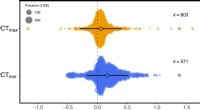
4. Data Analysis: The collected data is analyzed to look for patterns and trends.
5. Conclusion: Based on the data analysis, scientists draw conclusions about whether the hypothesis is supported or rejected.
Important Points:
* Scientific Method: This process is part of the scientific method, a systematic way of gaining knowledge about the natural world.
* Refining Hypotheses: Even if a hypothesis is supported, scientists may continue to refine and test it with further experiments.
* Falsifiability: A key principle of scientific hypotheses is that they must be falsifiable. This means there must be a possible outcome of the experiment that would disprove the hypothesis.
Let me know if you would like me to explain any of these steps in more detail!