Here's a breakdown:
* Mitosis is a type of cell division that produces two daughter cells that are genetically identical to the parent cell.
* This process is essential for growth, development, and repair in multicellular organisms.
During mitosis, the following key events occur:
1. DNA replication: The cell's DNA is copied, ensuring each daughter cell receives a complete set of chromosomes.
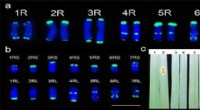
2. Chromosomes condense: The replicated chromosomes become tightly packed, making them visible under a microscope.
3. Nuclear envelope breakdown: The membrane surrounding the nucleus dissolves, allowing the chromosomes to move freely.
4. Chromosomes align: The chromosomes line up at the center of the cell.
5. Chromosomes separate: The sister chromatids (identical copies of each chromosome) are pulled apart to opposite ends of the cell.
6. Cytoplasm divides: The cell's cytoplasm divides, forming two separate daughter cells, each with a complete set of chromosomes.
Key takeaway: Mitosis ensures that each daughter cell receives an exact copy of the parent cell's genetic material, resulting in identical daughter cells.