The synthesis of proteins from simple molecules is a complex and fascinating process known as protein synthesis. It involves two main steps:
1. Transcription:
* The blueprint: DNA, the genetic code, contains the instructions for building proteins.
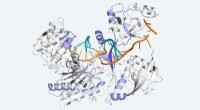
* Copying the code: A special enzyme called RNA polymerase reads the DNA sequence and creates a copy in the form of messenger RNA (mRNA). This process is like making a photocopy of a blueprint.
* Leaving the nucleus: mRNA, carrying the protein instructions, exits the nucleus and travels to the ribosomes in the cytoplasm.
2. Translation:
* The ribosome's role: Ribosomes are like protein factories. They read the mRNA code and assemble amino acids into a specific order.
* Amino acids: These are the building blocks of proteins, and there are 20 different types.
* Transfer RNA (tRNA): Each tRNA molecule carries a specific amino acid and recognizes a corresponding codon (a three-nucleotide sequence) on the mRNA.
* The chain grows: As the ribosome moves along the mRNA, it recruits tRNA molecules carrying the correct amino acids, forming a chain of amino acids, known as a polypeptide.
* Folding and modification: Once the polypeptide chain is complete, it folds into a specific three-dimensional shape, determined by the amino acid sequence. This shape is crucial for the protein's function.
* Functional protein: The folded polypeptide chain, now a functional protein, can perform its specific job in the cell.
Simple Molecules Involved:
The process uses a small collection of simple molecules:
* Nucleotides: The building blocks of DNA and RNA.
* Amino acids: The building blocks of proteins.
* Ribosomes: Composed of proteins and ribosomal RNA (rRNA).
* Enzymes: Catalyze the various steps of transcription and translation.
A remarkable feat:
Protein synthesis is a remarkable feat of cellular machinery, transforming simple molecules into complex and functional proteins. These proteins perform a wide range of essential functions, including:
* Enzymes: Catalyze chemical reactions.
* Structural proteins: Provide support and shape to cells and tissues.
* Hormones: Act as chemical messengers.
* Antibodies: Defend the body against infection.
* Transport proteins: Move molecules across cell membranes.
This intricate process is essential for life and highlights the incredible complexity and efficiency of cellular machinery.