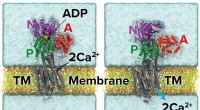
The sodium-potassium pump is a classic example of active transport. Here's how it works:
1. The pump binds three sodium ions (Na+) from the inside of the cell.
2. ATP (adenosine triphosphate), the cell's energy currency, is hydrolyzed (broken down) and releases energy.
3. This energy allows the pump to change shape and release the three sodium ions outside the cell.
4. The pump then binds two potassium ions (K+) from the outside of the cell.
5. Another shape change occurs, releasing the two potassium ions inside the cell.
Why is this active transport?
* Moving against the concentration gradient: The sodium-potassium pump moves sodium ions from an area of low concentration (inside the cell) to an area of high concentration (outside the cell). It also moves potassium ions from an area of low concentration (outside the cell) to an area of high concentration (inside the cell).
* Requires energy: The pump uses energy from ATP hydrolysis to move these ions against their concentration gradients. This energy expenditure is what distinguishes active transport from passive transport.
Importance of the sodium-potassium pump:
* Maintaining cell membrane potential: This pump is crucial for establishing and maintaining the electrical gradient across the cell membrane, which is essential for nerve impulses and muscle contractions.
* Regulating cell volume: The pump helps maintain the correct balance of water and solutes inside and outside the cell, preventing the cell from shrinking or swelling.
* Active transport of other molecules: The sodium-potassium pump also contributes to the active transport of other molecules, such as glucose, amino acids, and calcium ions.
In summary, the sodium-potassium pump is a vital example of active transport, demonstrating the movement of ions against their concentration gradient using energy from ATP hydrolysis. This process is essential for various cellular functions, including maintaining cell membrane potential, regulating cell volume, and facilitating the transport of other molecules.