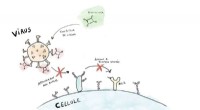
* Lysogenic Cycle: This is one of the two main cycles of viral replication. It's characterized by the viral DNA (or RNA that's converted to DNA) becoming integrated into the host cell's genome.
* Integration: The viral DNA becomes part of the host's chromosome. The virus, in this state, is called a provirus.
* Replication with Host: As the host cell replicates, it unknowingly replicates the viral DNA along with its own.
* Dormancy: The provirus can remain dormant within the host cell for an extended period.
* Lytic Cycle (Sometimes): At some point, the viral DNA can be triggered to enter the lytic cycle, where it takes over the host cell's machinery to produce new viruses, ultimately leading to the host cell's destruction.
Examples of Lysogenic Infections:
* HIV (Human Immunodeficiency Virus): HIV uses a lysogenic cycle to integrate its genetic material into the host cell's DNA.
* Herpes Simplex Virus (HSV): This virus is responsible for cold sores and genital herpes. It often remains latent in the nervous system and can reactivate later.
* Epstein-Barr Virus (EBV): This virus can cause infectious mononucleosis and is also associated with certain cancers.
Let me know if you have any other questions about viral replication!