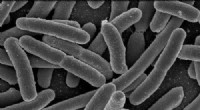
* All living organisms are made of cells. This is one of the fundamental tenets of cell theory. Whether it's a single-celled bacterium or a complex multicellular organism like a human, all living things are made of cells.
* Cells carry out all the functions necessary for life. Cells are capable of taking in nutrients, producing energy, eliminating waste, growing, and reproducing. These are all essential functions of life.
* Cells arise from pre-existing cells. This is another key principle of cell theory. New cells aren't spontaneously generated; they always come from the division of existing cells.
* The basic structure of cells is remarkably similar across all living organisms. From bacteria to plants to animals, cells share fundamental components like a cell membrane, genetic material (DNA), and ribosomes for protein synthesis.
* Cellular processes are essential for the survival of multicellular organisms. Cells in multicellular organisms work together in a coordinated way to maintain the overall health and function of the organism. This specialization of cells into tissues, organs, and organ systems demonstrates their crucial role in life.
In summary, the fact that all living organisms are composed of cells, that cells perform all the functions of life, and that new cells arise only from existing cells strongly supports the idea that cells are the basic units of life.