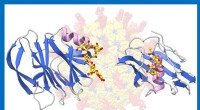
Here's why:
* Tiny Size: Ribosomes are incredibly small, measuring about 20-30 nanometers in diameter.
* Internal Structure: They are composed of two subunits, a large and a small one, which come together to form a functional ribosome.
* No Membrane: Unlike many other organelles, ribosomes are not surrounded by a membrane.
To visualize ribosomes, you need:
* Electron Microscopy: Electron microscopes provide much higher magnification than light microscopes, allowing us to see the individual ribosomes as small, dense granules within the cytoplasm.
* Molecular Models: Scientists use computer models to represent the complex 3D structure of ribosomes and how they function.
What does a ribosome do?
Ribosomes are the protein factories of the cell. They are responsible for translating the genetic code from messenger RNA (mRNA) into proteins. This process is essential for all cellular functions, including growth, repair, and metabolism.
So, while you can't see the exact shape of a ribosome, you can imagine them as tiny, bustling factories within the plant cell, constantly producing the proteins that keep the cell alive and functioning.