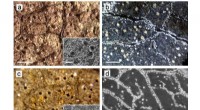
Here are some examples of body fossils:
* Bones and teeth: These are the most common types of body fossils, especially for vertebrates. They are very durable and can survive for millions of years.
* Shells: The hard outer coverings of mollusks, brachiopods, and other invertebrates are also common body fossils.
* Exoskeletons: The tough outer shells of insects, crustaceans, and trilobites are great examples.
* Imprints: In some cases, the soft tissues of an organism can be preserved as an imprint in rock. This is especially true for plants and other organisms that have delicate structures.
* Mummification: In rare cases, an organism can be preserved almost perfectly by natural processes, like drying or freezing.
What distinguishes body fossils from trace fossils:
* Trace fossils represent evidence of an organism's behavior or activity, like footprints, burrows, or dung. They don't contain the actual body parts themselves.
Body fossils are incredibly valuable tools for paleontologists. They provide direct evidence of the organism's anatomy, size, and even diet. By studying them, scientists can learn about the evolution of life on Earth and the environments in which organisms lived.