Characteristics of Asexual Reproduction:
* Single parent: Only one parent organism is involved.
* No genetic variation: The offspring are clones of the parent, inheriting the same genetic material. This means there is no mixing of genes from two parents.
* Rapid reproduction: Asexual reproduction can be much faster than sexual reproduction, allowing organisms to quickly produce many offspring.
* Limited adaptability: Since there is no genetic variation, offspring are equally vulnerable to environmental changes or diseases.
* Diverse methods: There are many different methods of asexual reproduction, including:
* Binary fission: A single-celled organism divides into two identical daughter cells (e.g., bacteria).
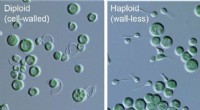
* Budding: A new organism develops from an outgrowth or bud on the parent (e.g., yeast).
* Fragmentation: A parent organism breaks into pieces, each of which develops into a new organism (e.g., starfish).
* Vegetative propagation: New plants arise from parts of the parent plant, such as stems, roots, or leaves (e.g., strawberries).
* Parthenogenesis: Development of an embryo from an unfertilized egg (e.g., some insects, lizards).
Advantages of Asexual Reproduction:
* Rapid population growth: Allows organisms to quickly colonize new environments.
* Energy efficiency: Requires less energy than sexual reproduction.
* Consistent offspring: Produces offspring that are well-suited to their environment if the environment is stable.
Disadvantages of Asexual Reproduction:
* Lack of genetic diversity: Makes populations vulnerable to environmental changes or diseases.
* Limited adaptability: Offspring are not able to adapt to changing environments as easily as offspring produced by sexual reproduction.
Examples of Asexual Reproduction in Nature:
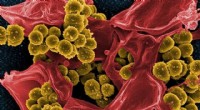
* Bacteria: Binary fission is the primary mode of reproduction for bacteria.
* Yeast: Budding is a common method of reproduction for yeast.
* Sea anemones: Can reproduce asexually through fission.
* Strawberries: Reproduce vegetatively through runners.
* Komodo dragons: Can reproduce through parthenogenesis.
Overall, asexual reproduction is a simple and efficient way for organisms to reproduce, but it comes with the disadvantage of limited genetic diversity.