Here's a breakdown:
* Analogous Structures: These are structures that have similar functions but have evolved independently in different lineages. They share a similar function due to convergent evolution, where unrelated organisms adapt to similar environments or lifestyles, resulting in similar traits.
Examples of Analogous Structures:
* Wings of birds, bats, and insects: All these organisms can fly, but their wings have different evolutionary origins. Bird wings are modified forelimbs, bat wings are skin membranes stretched between elongated fingers, and insect wings are outgrowths of the exoskeleton.
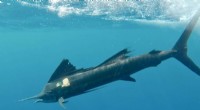
* Fins of fish and flippers of dolphins: Both structures are used for swimming, but fish fins are supported by bony rays, while dolphin flippers are modified limbs.
* Eyes of humans and octopuses: Both structures detect light, but the human eye has a lens that focuses light onto the retina, while the octopus eye has a pinhole-like opening that focuses light onto the retina.
Key takeaway: Analogous structures are a result of similar selective pressures shaping different lineages, leading to similar adaptations even though the underlying structures and evolutionary history differ.