* Coastal regions: They are mostly found in the intertidal zone and the subtidal zone, which are the areas between high and low tides and below the low tide mark, respectively.
* Temperate and cold waters: Brown algae thrive in cooler waters, primarily in the northern and southern hemispheres.
* Rocky substrates: They prefer to attach to hard surfaces like rocks, but can also be found on other substrates such as shells and sand.
* Nutrient-rich waters: They need sufficient nutrients, especially nitrates and phosphates, for growth.
Some examples of brown algae include:
* Kelp forests: Large, dense forests of kelp (a type of brown algae) are found in cold, nutrient-rich waters.
* Sargassum: This type of brown algae forms large floating mats in the Sargasso Sea, a region in the North Atlantic Ocean.
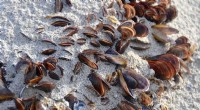
* Fucus: This genus of brown algae is common in the intertidal zone, often forming dense mats on rocky shores.
In summary, brown algae are mostly found in coastal regions of cold, clear, nutrient-rich waters, attached to rocky substrates.