While both mushrooms and seaweeds are important parts of our ecosystems, they are vastly different organisms:
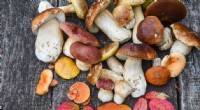
Mushrooms:
* Kingdom: Fungi
* Cellular structure: Eukaryotic (cells with a nucleus)
* Nutrition: Heterotrophic (cannot produce their own food, they get nutrients from decomposing organic matter)
* Habitat: Land (mostly)
* Structure: They are the fruiting bodies of a larger organism, a network of hyphae (thread-like structures) that grows underground.
* Examples: Button mushrooms, shiitake mushrooms, portobello mushrooms, truffles.
Seaweeds:
* Kingdom: Protista (mostly) or Plantae (some species)
* Cellular structure: Eukaryotic
* Nutrition: Autotrophic (can produce their own food through photosynthesis)
* Habitat: Water (mostly marine, some freshwater)
* Structure: They are macroscopic algae, often attached to rocks or other surfaces.
* Examples: Kelp, nori, spirulina, agar-agar.
In summary:
* Mushrooms are fungi that break down organic matter for food.
* Seaweeds are algae that make their own food through photosynthesis.
Here's a table to illustrate the differences:
| Feature | Mushrooms | Seaweeds |
|---|---|---|
| Kingdom | Fungi | Protista (mostly) or Plantae (some) |
| Nutrition | Heterotrophic | Autotrophic |
| Habitat | Land | Water |
| Structure | Fruiting bodies of underground network | Macroscopic algae |
| Examples | Button mushrooms, shiitake, portobello | Kelp, nori, spirulina |
Both mushrooms and seaweeds have important roles in their respective environments, contributing to food webs, nutrient cycling, and even serving as food sources for humans.