Here's a breakdown:
* Promoter: This is a short sequence of DNA located upstream (before) the gene that needs to be transcribed. It acts as a signal for the RNA polymerase to bind and initiate transcription.
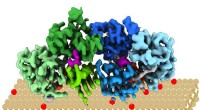
* RNA Polymerase: This is the enzyme responsible for reading the DNA sequence and building a complementary RNA molecule.
The binding of RNA polymerase to the promoter is crucial for the initiation of transcription. Here's why:
* Recognition: The promoter sequence contains specific motifs that RNA polymerase recognizes and binds to.
* Positioning: The promoter helps orient RNA polymerase correctly on the DNA strand so that transcription starts at the appropriate point.
* Unwinding: RNA polymerase unwinds the DNA double helix at the promoter region, making the template strand accessible for transcription.
Different types of promoters exist in different organisms:
* Prokaryotes: Typically have a -10 box (TATAAT) and a -35 box (TTGACA) sequence.
* Eukaryotes: Have a more complex promoter structure with multiple elements, including the TATA box and other regulatory sequences.
In summary, the promoter acts like a landing pad for RNA polymerase, guiding it to the correct location on the DNA and enabling it to begin the process of creating a new RNA molecule.