These three types of evidence are used to support the theory of evolution by providing insights into the relationships between organisms and how they have changed over time. Here's a breakdown of their key differences:
1. Anatomical Evidence:
* Focus: Structural similarities and differences in organisms' bodies.
* Examples:
* Homologous structures: Similar structures with different functions (e.g., human arm, bat wing, whale flipper) suggest common ancestry.
* Analogous structures: Similar structures with similar functions but different evolutionary origins (e.g., bird wing and insect wing) suggest convergent evolution.
* Vestigial structures: Reduced or non-functional structures that were present and functional in ancestral organisms (e.g., human appendix, whale pelvic bones) indicate evolutionary changes.
* Advantages: Observable and often easily studied, providing strong evidence for shared ancestry.
* Limitations: Can be difficult to interpret in cases of convergent evolution, and some structures may have lost their original function over time.
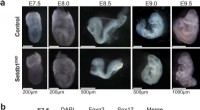
2. Embryological Evidence:
* Focus: Similarities and differences in embryonic development across different species.
* Examples:
* Early embryos of vertebrates share striking similarities, suggesting common ancestry.
* Developmental stages that are similar to those of ancestral species provide evidence of evolutionary history.
* Advantages: Reveals evolutionary relationships beyond adult morphology and often shows stages of development that are not present in adults.
* Limitations: Embryological development can be complex and challenging to study in detail.
3. Biochemical Evidence:
* Focus: Similarities and differences in the molecular composition of organisms, particularly DNA and proteins.
* Examples:
* The universality of the genetic code indicates a shared ancestor for all life.
* Closely related species share more similarities in DNA sequences and protein structures than distant relatives.
* Advantages: Highly sensitive and quantitative, providing precise measurements of evolutionary relationships.
* Limitations: Requires advanced techniques and expertise for analysis.
In summary:
* Anatomical evidence focuses on the physical structure of organisms.
* Embryological evidence explores the developmental history of organisms.
* Biochemical evidence investigates the molecular makeup of organisms.
All three types of evidence provide complementary insights into the evolutionary process. By combining these different lines of evidence, scientists can build a more complete picture of the history of life on Earth.