1. Theory of Evolution by Natural Selection: This theory explains how life on Earth has changed over millions of years through a process of variation, inheritance, and selection. Organisms with traits better suited to their environment are more likely to survive and reproduce, passing those traits on to their offspring. This theory is supported by a vast amount of evidence from fossils, genetics, and observations of living organisms.
2. Theory of Plate Tectonics: This theory explains the movement of the Earth's continents and the formation of mountains, volcanoes, and earthquakes. It states that the Earth's outer layer is made up of large plates that move slowly over time, driven by heat from the Earth's interior. This theory has been supported by observations of seafloor spreading, magnetic patterns on the ocean floor, and the distribution of fossils and rock types.
3. Theory of Relativity (Special and General): These theories describe the relationship between space, time, gravity, and the universe. The Special Theory of Relativity explains that the laws of physics are the same for all observers in uniform motion, while the General Theory of Relativity explains that gravity is a consequence of the curvature of spacetime caused by the presence of mass and energy. These theories have been confirmed by numerous experiments and observations, such as the bending of light around massive objects.
4. Atomic Theory: This theory describes the structure of atoms, the fundamental building blocks of matter. It states that atoms are made up of even smaller particles called protons, neutrons, and electrons. This theory has been developed through many experiments and observations, and has led to the development of many technologies, including lasers and nuclear power.
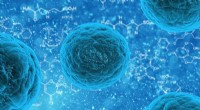
5. Cell Theory: This theory states that all living things are made up of cells, which are the basic unit of life. Cells can exist as independent units or can work together to form tissues, organs, and organisms. This theory is supported by the observation of cells through microscopes, and the discovery of many common cellular structures and processes.
It is important to note that scientific theories are not just guesses or hypotheses. They are well-supported explanations of natural phenomena, based on a vast amount of evidence and rigorous testing. While theories can be modified or refined over time as new evidence emerges, they are not easily discarded. They provide a framework for understanding the world around us and for making predictions about future observations.