Natural Sciences:
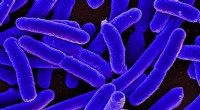
* Biology: Study of life and living organisms, including their structure, function, growth, origin, evolution, and distribution.
* Chemistry: Study of matter and its properties, as well as how matter changes.
* Physics: Study of the fundamental constituents of the universe and the laws that govern their behavior.
* Astronomy: Study of celestial objects and phenomena, including stars, planets, galaxies, and the universe as a whole.
* Earth Science: Study of the Earth's physical systems, including its atmosphere, oceans, landforms, and geological history.
* Environmental Science: Study of the interactions between organisms and their environment, including the impact of human activities on the planet.
Formal Sciences:
* Mathematics: Study of numbers, quantities, structures, and their relationships.
* Logic: Study of valid reasoning and argumentation.
* Computer Science: Study of computation, algorithms, and information processing.
Social Sciences:
* Anthropology: Study of human societies, cultures, and their development.
* Economics: Study of how people make choices in the face of scarcity.
* Political Science: Study of government, power, and political processes.
* Psychology: Study of the mind, behavior, and mental processes.
* Sociology: Study of human society, social groups, and social interactions.
Applied Sciences:
* Engineering: Application of scientific principles to solve practical problems and create useful products and systems.
* Medicine: Application of scientific knowledge to the diagnosis, treatment, and prevention of disease.
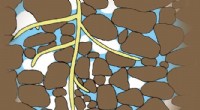
* Agriculture: Application of scientific principles to the production of food and fiber.
* Technology: Application of scientific knowledge to create new products and processes.
Other Important Fields:
* Interdisciplinary Sciences: Combine elements of multiple fields, such as biophysics, astrochemistry, or environmental economics.
* Transdisciplinary Sciences: Integrate knowledge from different disciplines to address complex challenges, like climate change or global health.
This is just a general overview, and many fields overlap and are interconnected in complex ways. For example, physics is fundamental to many other sciences, including chemistry, astronomy, and engineering.