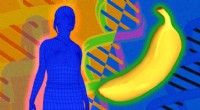
A mutation is a permanent change in the DNA sequence of an organism. This change can be as small as a single nucleotide substitution or as large as a deletion or duplication of entire genes.
Think of it like this: DNA is like a recipe for building an organism. A mutation is like a typo in that recipe. Sometimes, the typo is harmless and doesn't affect the final product. Other times, the typo can lead to a significant change in the recipe, resulting in a different organism.
Mutations are the raw material for evolution. They provide the genetic variation upon which natural selection can act.
Here's how it works:
* Mutations create new alleles: Alleles are different versions of a gene. Mutations can create new alleles, leading to a wider range of traits within a population.
* Natural selection favors advantageous traits: If a mutation results in a trait that increases an organism's chances of survival and reproduction, that trait is more likely to be passed on to the next generation. Over time, the frequency of the advantageous allele increases in the population.
* Evolutionary change: The accumulation of these small, beneficial mutations over many generations can lead to significant evolutionary change.
Example: Imagine a population of bacteria. A mutation occurs in one bacterium that gives it resistance to a particular antibiotic. This bacterium is more likely to survive and reproduce, passing on its resistance gene to its offspring. Over time, the antibiotic-resistant strain becomes more common in the population.
In summary, mutations are essential for evolution because they create the genetic variation that natural selection acts upon. Without mutations, there would be no new traits for natural selection to favor, and evolution would be impossible.
Important Note: Mutations are random and can be harmful, neutral, or beneficial. It's important to remember that most mutations are either neutral or harmful. Only a small proportion of mutations are beneficial and contribute to evolution.