1. Fossil Record:
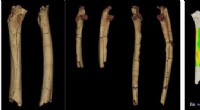
* Comparative Anatomy: Scientists compare the skeletons, teeth, and other physical features of fossils to those of modern organisms. Similarities in bone structures or teeth shapes suggest common ancestry.
* Fossil Succession: Fossils appear in a specific order in rock layers, with simpler life forms in older layers and more complex forms in younger layers. This pattern supports the idea of evolution over time.
* Transitional Fossils: These fossils show intermediate stages between different groups of organisms, providing evidence for evolutionary changes over long periods.
2. Molecular Evidence:
* DNA and Protein Comparisons: Comparing the DNA sequences and protein structures of different organisms can reveal how closely related they are. Organisms with similar DNA or protein sequences likely share a recent common ancestor.
* Phylogenetic Trees: Scientists use molecular data to construct phylogenetic trees, which illustrate the evolutionary relationships among different species. These trees are based on the principle that the more closely related two species are, the fewer differences their DNA or protein sequences will have.
3. Biogeography:
* Distribution of Species: The distribution of organisms across the globe provides insights into their evolutionary history. For example, the presence of similar species on continents separated by vast oceans suggests that they had a common ancestor before continental drift separated them.
* Island Biogeography: Studying the unique species found on isolated islands can reveal how organisms evolve in response to specific environments and how they relate to their mainland counterparts.
4. Developmental Biology:
* Embryonic Similarities: Comparing the early stages of development in different organisms can reveal similarities that suggest a common ancestry. For example, all vertebrates share a similar embryonic stage with gill slits and a tail, even though these features are only fully developed in fish.
5. Other Evidence:
* Trace Fossils: These fossils record the behavior of extinct organisms, such as footprints, burrows, and dung. They provide information about how organisms lived and interacted with their environment.
* Isotope Analysis: Analyzing the ratios of different isotopes in fossils can provide clues about the environment in which the organism lived and its diet.
By combining these different lines of evidence, scientists can confidently reconstruct the evolutionary history of life on Earth and understand the relationships between organisms that lived millions of years ago and those living today.