Here's why:
* The scientific method is a framework, not a rigid set of rules: It's a guideline for how to approach a question systematically, but its application can be flexible.
* Different investigations have different needs: Some investigations might be very simple and only require observation and experimentation. Others might be more complex and require all the steps.
* The focus of the investigation dictates the methods: If your goal is to simply observe a phenomenon, you might not need to formulate a hypothesis or conduct an experiment.
Here are some examples:
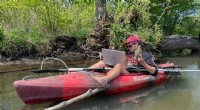
* Observing the behavior of birds: You might simply observe and record what you see, without needing to form a hypothesis or conduct a controlled experiment.
* Testing the effectiveness of a new fertilizer: You would likely need to formulate a hypothesis, design an experiment, collect data, analyze results, and draw conclusions.
* Investigating the impact of climate change on sea levels: This would likely involve a combination of observation, data analysis, modeling, and predictions, but may not require a controlled experiment in the traditional sense.
Ultimately, the key is to choose the methods that are most appropriate and effective for your specific research question.
However, it's important to note that using all the steps in the scientific method generally leads to more rigorous and reliable results.