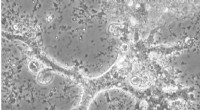
1. Telophase:
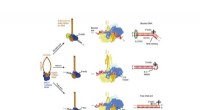
* Nuclear envelope reforms: The nuclear envelope, which was broken down during prophase, reassembles around the separated chromosomes at each pole of the cell.
* Chromosomes uncoil: The condensed chromosomes begin to uncoil and relax, becoming less visible.
* Nucleoli reappear: The nucleoli, which were also disassembled during prophase, reappear within each nucleus.
* Spindle fibers disappear: The spindle fibers that were essential for chromosome movement break down.
2. Cytokinesis:
* Cell membrane pinches in: The cell membrane starts to pinch inward, forming a cleavage furrow in animal cells, or a cell plate in plant cells.
* Cell divides: This pinching action continues until the cell membrane completely separates, resulting in two distinct daughter cells.
Outcome:
The process of mitosis produces two genetically identical daughter cells. Each daughter cell has the same number of chromosomes and the same genetic information as the original parent cell. This is crucial for growth, development, and repair of multicellular organisms.
Important Note: While cytokinesis often overlaps with telophase, it is technically a separate process.