Fossils are the preserved remains or traces of ancient life. They can be anything from bones and teeth to footprints, leaf impressions, and even fossilized dung.
How are fossils formed?
Fossils form when organisms die and are buried quickly by sediment (like sand, silt, or mud). Over time, these sediments harden into rock, preserving the remains. The process of fossilization can take millions of years.
What can fossils tell us?
Fossils are like snapshots of life throughout Earth's history, offering invaluable insights into:
* Past environments: Fossil types can reveal information about the climate, geography, and ecosystems of the past. For example, finding fossilized coral reefs indicates a tropical marine environment.
* Evolutionary history: Fossils document the changes in life forms over time, providing evidence for the theory of evolution.
* Extinction patterns: Fossils show how species have appeared, flourished, and disappeared throughout Earth's history. This information helps us understand the factors driving extinctions and the consequences for biodiversity.
* Dating Earth's history: Fossils can be used to date rock layers and help reconstruct Earth's geological timeline.
Evolutionary Evidence from Fossils:
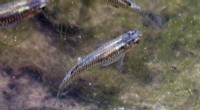
* Transitional fossils: These fossils demonstrate evolutionary links between different groups of organisms, showing gradual changes in form and function over time. A famous example is the transition from fish to amphibians, documented by fossils like *Tiktaalik*.
* Extinction and diversification: Fossils show that species go extinct and new ones arise, highlighting the dynamic nature of life on Earth.
* Biogeography: Fossil distributions across continents provide evidence for continental drift and the movement of species over geological time.
* Adaptive radiation: Fossils reveal how a single ancestral species can diversify into a wide range of new species adapted to different environments.
Limitations of Fossils:
* Incomplete record: The fossil record is incomplete; only a small percentage of organisms are fossilized.
* Bias: Certain environments are more conducive to fossilization than others. This can lead to a biased view of past life.
* Interpretation: Interpreting fossil evidence often requires inference and can be subject to different interpretations.
Conclusion:
Fossils are invaluable tools for understanding the history of life on Earth and the process of evolution. They provide tangible evidence for the gradual change and diversification of life over millions of years, revealing the interconnectedness and dynamic nature of the natural world.