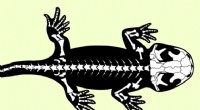
1. Fossil Record: Fossils provide a direct record of life on Earth over millions of years. We see clear patterns of change in organisms over time, with simpler life forms appearing earlier in the geological record and more complex forms emerging later. For example, the fossil record shows the transition from fish to amphibians, reptiles to mammals, and the evolution of horses from small, multi-toed ancestors to the large, single-toed animals we know today. This progression of fossils provides compelling evidence that life has changed over time, supporting the idea of evolution.
2. Homologous Structures: These are structures found in different species that share a common underlying anatomy, despite having different functions. A classic example is the bone structure in the forelimbs of vertebrates: humans, cats, bats, and whales all share a similar bone arrangement in their forelimbs, even though these limbs are used for very different activities (grasping, walking, flying, swimming). This similarity points to a common ancestor, indicating that these species descended from a shared lineage. The presence of homologous structures strongly supports the idea of common descent and evolutionary change.