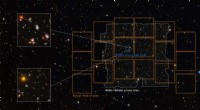
1. Observation: Scientists start by carefully observing the world around them. This can involve anything from looking at the stars to studying the behavior of animals to analyzing data in a lab. Observations can help scientists identify patterns, anomalies, or interesting phenomena that need further explanation.
2. Previous Research: Reviewing existing scientific literature is crucial. Scientists study previous research to understand what is already known about a topic, what questions remain unanswered, and what methods have been successful in the past.
3. Curiosity & Imagination: Good hypotheses often arise from a scientist's curiosity and ability to imagine different explanations. This is where creativity comes in. Scientists might ask "What if...?" and try to think of different potential reasons for what they've observed.
4. Inductive Reasoning: This is the process of drawing general conclusions from specific observations. For example, if a scientist observes that all swans they have ever seen are white, they might induce that all swans are white. This is a basic example, but it demonstrates the process of taking specific data and forming a general statement.
5. Deductive Reasoning: This is the process of using a general statement to make specific predictions. For example, if a scientist knows that all birds have feathers, and they observe a new animal with feathers, they might deduce that the animal is a bird.
6. Scientific Method: The scientific method provides a structured framework for generating hypotheses. It involves defining a problem, making observations, forming a hypothesis, designing an experiment, collecting and analyzing data, and drawing conclusions.
7. Collaboration & Discussion: Scientists often work together and discuss their ideas with colleagues. These discussions can help generate new hypotheses and refine existing ones.
8. Testing & Revision: A hypothesis is not just a guess; it must be testable. Scientists design experiments or gather data to test their hypotheses. If the results do not support the hypothesis, they may need to revise it or develop a new one.
9. Theories and Laws: While not directly making hypotheses, theories and laws provide a framework for understanding the world. For example, the theory of evolution or the laws of motion provide a foundation for making hypotheses about specific phenomena.
Ultimately, making a good hypothesis requires a combination of these strategies. It is a process of observation, research, imagination, reasoning, and testing.