Here's a breakdown of key characteristics:
* Testable: It must be possible to design an experiment or collect data to either confirm or disprove the hypothesis.
* Specific: It should be clear and concise, focusing on a specific relationship or effect.
* Falsifiable: It must be possible to conceive of an observation or experiment that would demonstrate the hypothesis to be incorrect.
* Based on evidence: It should be grounded in prior knowledge and observations, not just a random guess.
Think of it as a "educated guess" that you can test.
Here's a simple example:
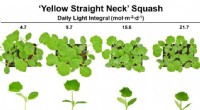
Observation: Plants seem to grow better in sunlight.
Hypothesis: Plants need sunlight to grow.
Experiment: Grow two identical plants, one in sunlight and one in the dark. Observe growth over time.
Result: The plant in sunlight grows significantly more than the plant in the dark.
Conclusion: The hypothesis is supported.
Important notes:
* A hypothesis is not necessarily "true" just because an experiment supports it. It may just be the best explanation available at the time.
* A hypothesis can be revised or rejected based on new evidence.
* The scientific method is an iterative process; a hypothesis can lead to new observations, hypotheses, and experiments.